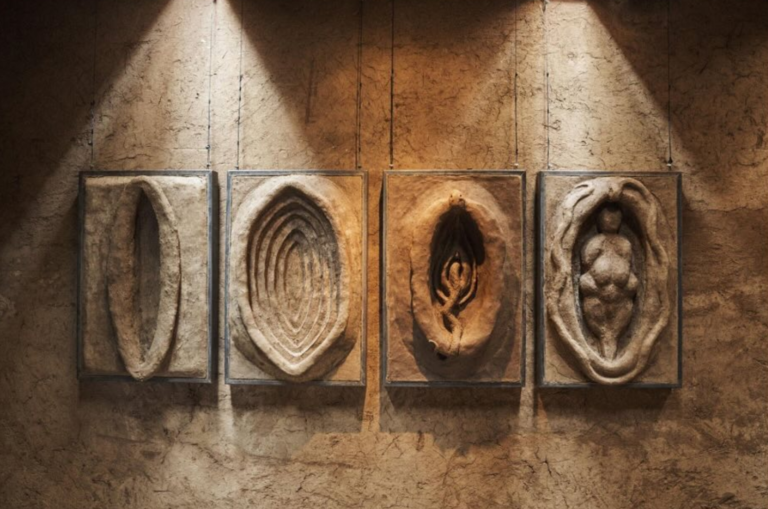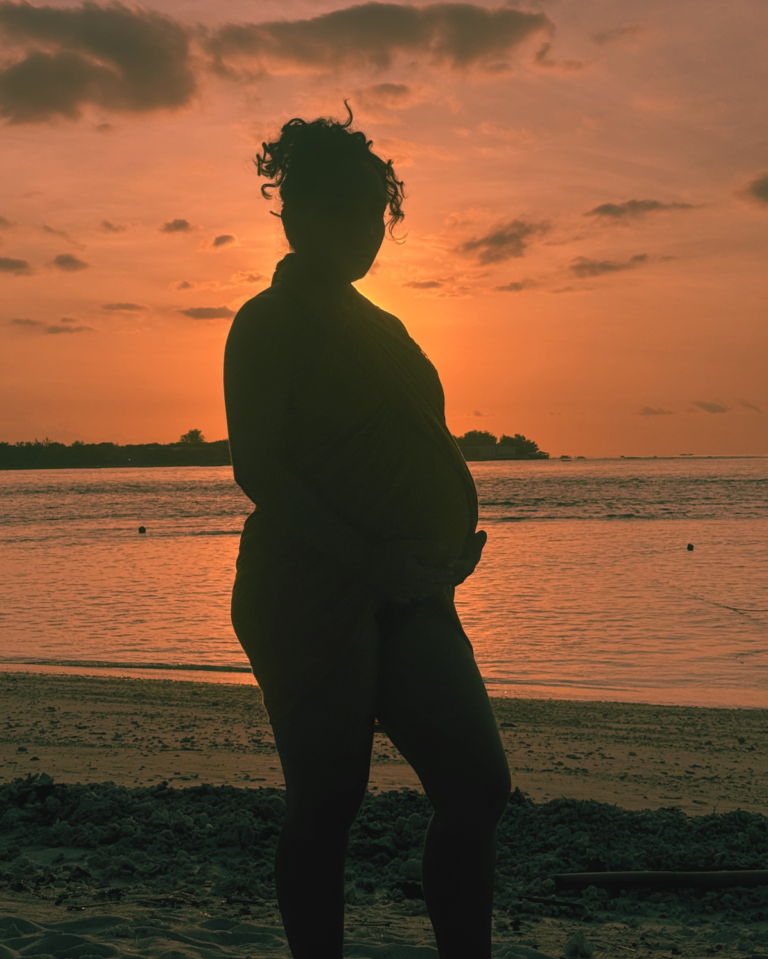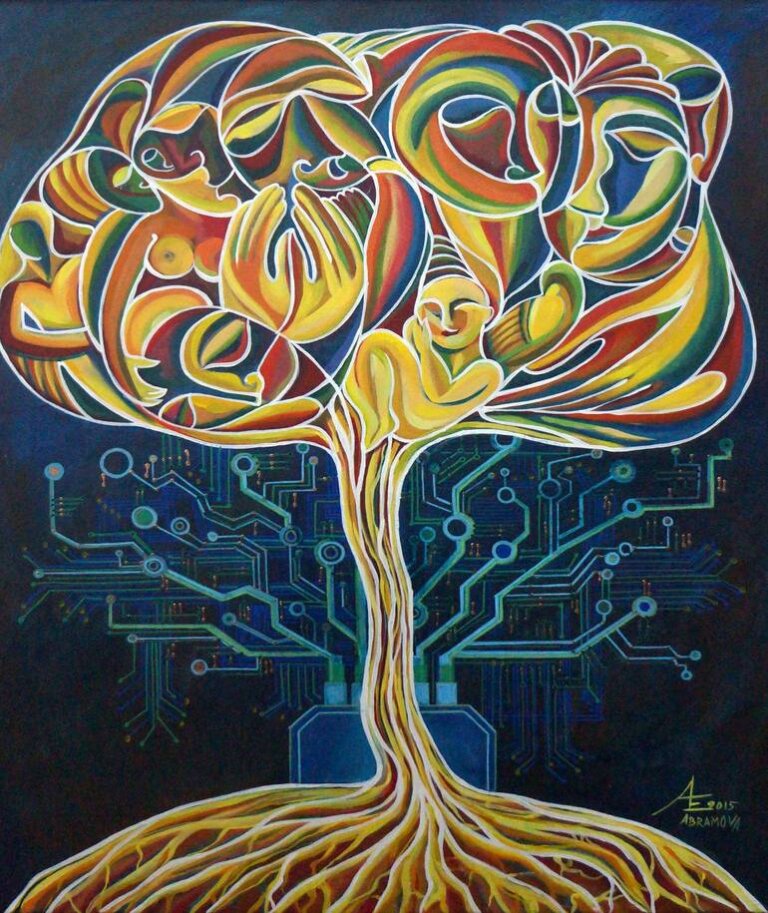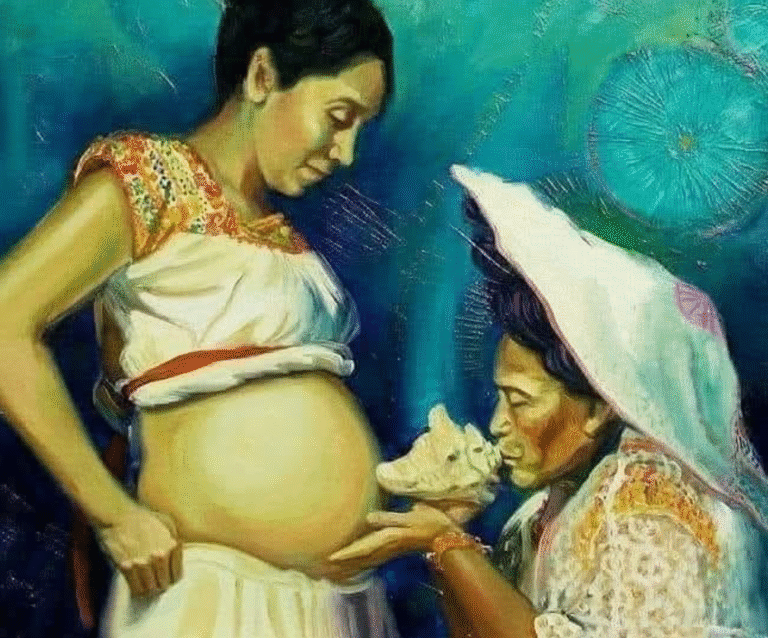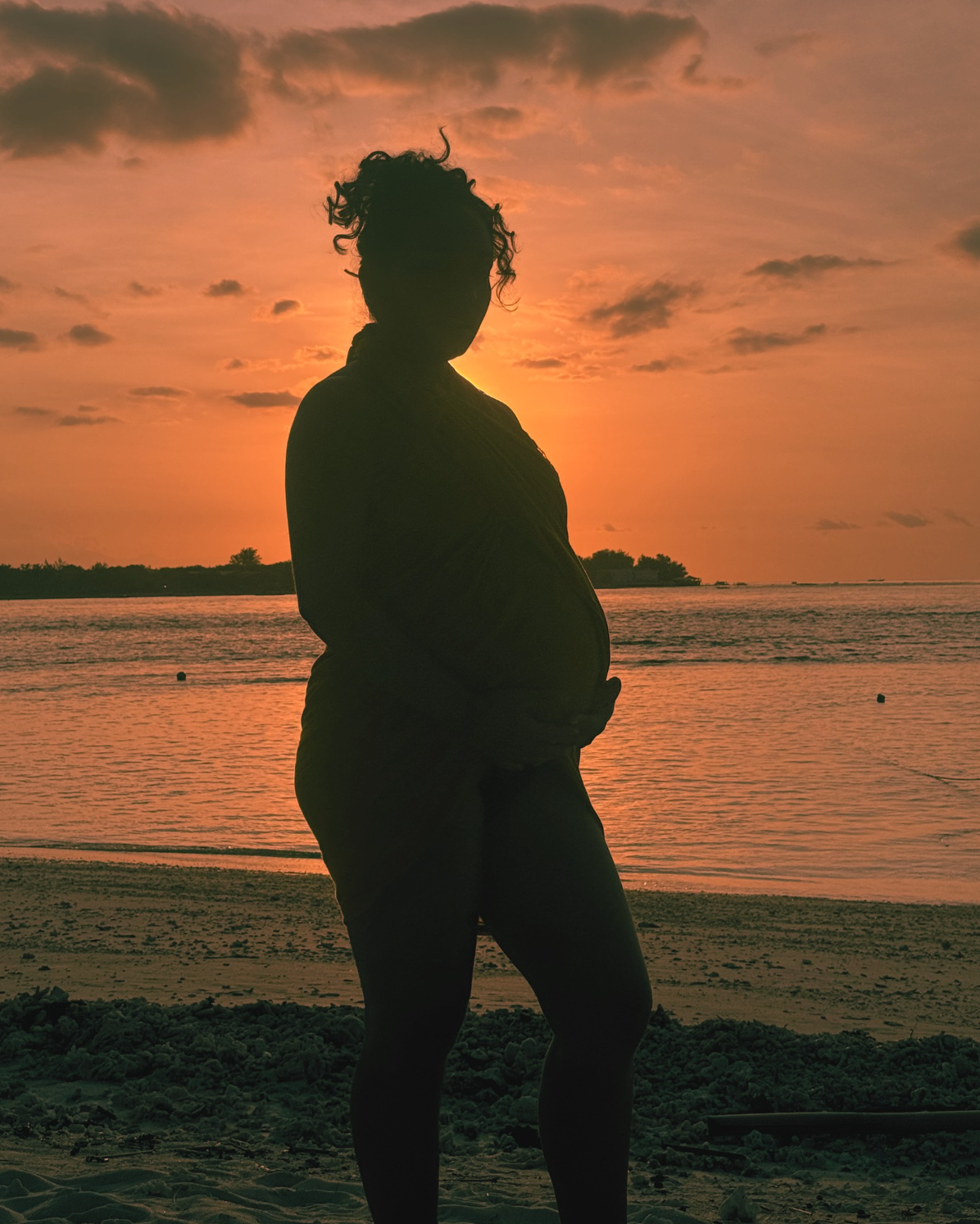
While pregnancy can look beautiful and glowing, I too have been shamelessly sharing the beauty of this bountiful body; a body that has expanded its womb, shifted its organs, and thickened itself enough to carry and create another human life, all while continuing to work, swim, sing, love, and move through the world. I am in immense awe of this exquisitely demanding initiation.
And yet, beneath the beauty is a body undergoing rupture, reorganisation, and relentless change. It feels more possible now to experience a healthy, vibrant, and supported pregnancy than it may have for many of our mothers, whose bodies were often shaped beneath the isolating pressures of modernity, capitalism, and disconnection from communal care.
I want to speak to the undercurrents of pregnancy; the struggles, griefs, sensitivities, and invisible rearrangements that so few speak honestly about. So much remains hidden beneath shame, performance, or the pressure to appear endlessly grateful and glowing.

Invisible Hormonal Tide
A pregnant body undergoes hormonal shifts so immense that they are difficult to comprehend unless lived directly. In pregnancy, estrogen levels can rise up to 100-fold, creating one of the most hormonally intense transitions the human body can undergo, while oxytocin, prolactin, and relaxin begin reshaping everything from emotional bonding to ligaments, sleep, digestion, and nervous system regulation. These changes are not always visible from the outside, yet they alter mood, memory, sensitivity, energy levels, perception, and emotional processing.
There are days the body feels ancient, porous, ecstatic, grieving, exhausted, and deeply alive all at once. Pregnancy is not simply a physical transformation; it is a neurochemical, hormonal, and emotional reorganisation happening in real time.
There have been days where I wake up crying, completely disoriented, unable to articulate what I am feeling; amidst sudden pressure in my pelvis, swollen feet, a tightening belly, and a body asking for more than I know how to give. Other days, I feel a burst of energy and can work, socialise, commute, and move through the world almost normally, only to collapse into deep rest soon after. Those days feel special now, as much as the days devoted entirely to grief, stillness, or survival.
Old Wounds Surface
One thing that has surprised me most about pregnancy is how much of my own origin story has resurfaced. Memories from infancy, childhood, family dynamics, and early emotional imprints seem to rise from somewhere deep in the body. It has made me realise how profoundly the mind and nervous system can create narratives around safety, love, abandonment, care, and belonging — narratives that may no longer even be true, yet still live inside us physiologically.
Pregnancy does not only grow a baby; it also confronts you with the conditions that once shaped you. In preparing to become a mother, I have also found myself meeting the baby that I once was.
There has been a lot to undo, a lot to grieve, and a lot to rewrite.
Resting Without Guilt
Rest, in a culture shaped by productivity and performance, can feel almost transgressive. To truly slow down while the world continues moving requires immense mental clarity and inner strength. Pregnancy has forced me to understand rest not as laziness, but as biological intelligence.
Growing life requires enormous metabolic, emotional, and spiritual resources. I have had to confront how deeply productivity lives inside my nervous system. Some days the body simply refuses performance. Learning not to override that has become part of the practice.
There is also a disorientation in waking each day to a body that no longer feels predictable. The body expands, softens, aches, swells, leaks, tightens, and reorganises itself rapidly. Some days you feel powerful and deeply embodied; other days unfamiliar to yourself.
Pregnancy asks for a continual renegotiation of identity, mobility, sensuality, comfort, and control. And while it is absolutely beautiful to grow new life, there is also a cost to it. This process draws deeply from your mineral reserves, your energy, your nervous system, your availability to the outside world. Increasingly, I feel a strong nesting instinct arise — more territorial, more protective, more attuned to what feels safe, nourishing, and sustainable. So much of my energy now goes toward making this baby and that often makes me unavailable to many aspects of the life of a maiden.
“Your womb is not only for carrying children, it is for carrying visions, nations, and new timelines” – Queen Afua
Social Worlds Rearrange
Pregnancy sharpens your awareness of who can truly meet a birthing body with tenderness, sensitivity, and care — and who cannot. Some people lean in with presence and maturity. Others become dismissive, avoidant, uncomfortable, or self-oriented. You begin to notice how deeply motherhood and children are politicised, unsupported, romanticised, or invisible within modern culture. Relationships reveal themselves differently once your body can no longer perform endless independence and availability.
One of the quiet griefs of pregnancy is realising that some relationships were only sustainable when you could constantly give, respond, organise, nurture, or show up. As energy changes and priorities reorganise, some people struggle to accept your reduced availability. Boundaries that once felt simple can suddenly create rupture.
I often played the role of caretaker within my family, friendships, and work. This pregnancy has forced me to loosen my attachment to that role, to take up more space, and to strengthen my receiving muscle.
I refuse to become a martyr mother, as so many of our mothers were conditioned to become. I know that path leads toward depletion, resentment, and exhaustion. The more I learn to receive support within this tender threshold, the more capable I become of creating sanctuary — not only for this child, but for my beloveds, my community, and myself.